Tumi Alpha 3 vs. Aer Tech Brief: Which Is Better for Airport Days?
For airport days, a work bag has to do more than look polished. It needs to carry your actual laptop, keep essentials reachable at security, ride comfortably through a long terminal, and fit the airline’s personal-item rules. That makes the Tumi Alpha 3 and Aer Tech Brief a useful comparison: both are designed for business travel, but they prioritize different things.
Short answer: Choose the Aer Tech Brief if you want a comparatively streamlined, tech-focused bag with a clear laptop-fit claim and a more casual performance-material look. Choose a Tumi Alpha 3 brief if you prefer a traditional business aesthetic, more formal organization, and Tumi’s luggage-oriented design. But compare exact models—not just collections—and check the published dimensions against your airline’s limits before buying.
First, identify the exact bags
“Tumi Alpha 3” covers multiple briefcases, including slimmer and expandable models. Their dimensions, capacity, organization, and weight are not identical. Aer’s Tech Brief name can also refer to different versions; this comparison uses the Aer Tech Brief 2 as the reference point. Always confirm that a listing is for the same version before relying on a review or specification.
Comparison point Tumi Alpha 3 Aer Tech Brief 2 Style Traditional business briefcase, with model-dependent structure Modern, tech-oriented brief with a cleaner, more casual look Common reference dimensions Varies by Alpha 3 model; check the exact product listing About 16.5 × 11.5 × 3.5 inches Published weight Varies by model; verify before purchase About 3.2 lb for the Tech Brief 2 Laptop-fit approach Fit claim varies by brief; verify the specific model’s stated maximum Designed to fit laptops up to 16 inches; check device dimensions and case thickness Best fit for More formal office settings and conventional briefcase organization Tech-heavy carry and travelers who prefer a streamlined, contemporary designThese are reference figures, not a promise that every bag in either collection has the same specifications. Dimensions may also be measured differently by brands, particularly when a bag is soft-sided or packed. For travel, the specification that matters is the exact model’s outside dimensions, including any handles, bulges, or expansion features.

Laptop fit: measure the computer, not the screen label
A “16-inch laptop” label describes screen size, not the full width and depth of the computer. Two machines with the same screen measurement can have different chassis dimensions, and a protective case adds still more bulk. Before ordering either brief, measure your laptop at its widest, deepest, and thickest points—including its case if you plan to use one.
Aer’s Tech Brief 2 is the more straightforward choice for shoppers who want a published fit claim for a laptop up to 16 inches. Still, that claim is a starting point, not a substitute for comparing your device measurements with the bag’s internal laptop compartment. A snug sleeve may fit a bare laptop but not one in a padded shell.
Tumi Alpha 3 laptop capacity depends on the specific briefcase. Do not assume that every Alpha 3 model accepts a 16-inch machine just because the collection includes laptop bags. Some models have smaller stated maximums. If the product page says 15 inches—or uses a broad phrase such as “fits most laptops”—ask for the compartment’s internal dimensions before treating it as a 16-inch option.
A practical fit check
- Measure your laptop’s outer dimensions, including any protective case.
- Compare those measurements with the bag’s laptop-compartment dimensions, not its exterior dimensions.
- Allow a little clearance for inserting and removing the computer without forcing it into the sleeve.
- Check whether the laptop compartment is separate from the main compartment and whether its zipper opening accommodates your device’s corners.
This is where vague product copy is least useful. If a brand gives a screen-size limit but no compartment measurements, contact customer service or look for a retailer with a clear return policy.
Empty weight and comfort: weigh the bag before adding your tech
Empty weight is easy to overlook when comparing briefcases, especially if one has more padding, pockets, or structural reinforcement. The Aer Tech Brief 2’s published weight is about 3.2 pounds. Tumi Alpha 3 weights vary by model, so compare the exact listing rather than assigning one number to the entire line. If the bag’s weight is missing, treat that as a meaningful gap in the spec sheet.
That difference matters because a laptop, charger, power bank, water bottle, and travel documents can quickly turn a briefcase into a heavy shoulder load. A bag that feels manageable on a five-minute walk from a car may feel different after a terminal transfer or a delayed flight. Check the strap width and padding, attachment points, handle comfort, and whether the bag stays balanced when it is only partly full.
For an airport routine, usable organization can reduce how often you set the bag down and rummage through it. Count functional pockets, not marketing pockets: a quick-access pocket that actually fits your passport and phone is useful; a narrow slot that cannot accept either is not. Look for a separate place for a laptop charger, a secure spot for travel documents, and an easy-to-reach pocket for items you remove at screening.
Personal item dimensions: the under-seat test
Both reference bags are roughly 16.5 inches long in at least one dimension. Southwest’s published personal-item limit has commonly been listed as 16.25 × 13.5 × 8 inches, so a 16.5-inch bag is a quarter-inch over the stated limit on that side. Soft-sided bags may compress, but travelers should not treat compression as guaranteed acceptance. Check the Southwest carry-on baggage policy page for current rules before flying; airline policies and enforcement can change.
Also distinguish a carry-on from a personal item. A bag may fit in an overhead bin and still be too large for the airline’s under-seat personal-item allowance. If you plan to travel with only one work bag, verify both the airline’s personal item dimensions and its carry-on rules. Measurements on a product page describe the bag, while airline limits describe what the airline permits.
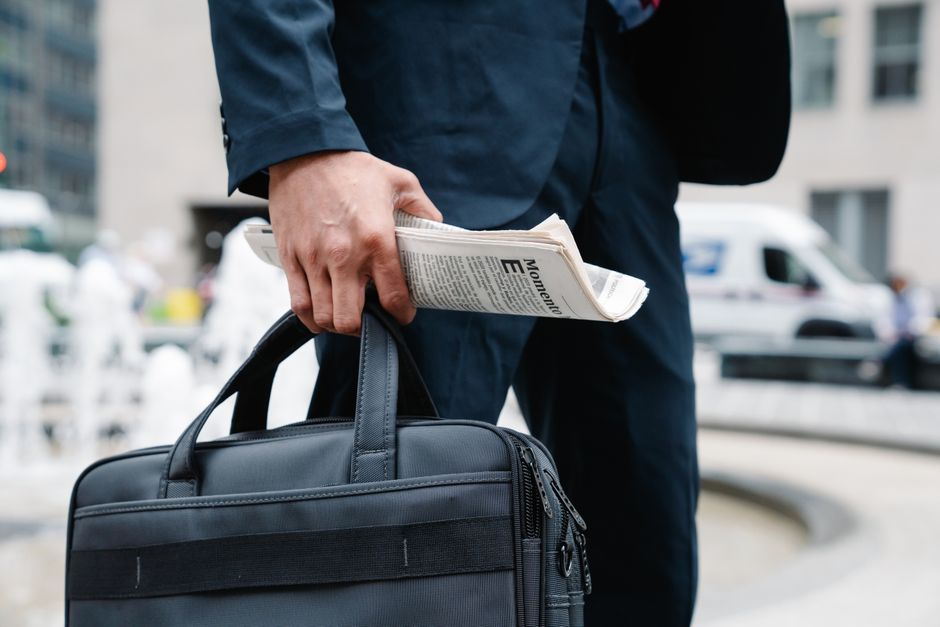
Expandable models deserve extra scrutiny. Expansion can help on the return trip, but it adds depth and may make a bag less suitable under the seat. If personal-item compliance is a priority, compare the bag’s unexpanded and expanded measurements with the airline’s published limits.
Boardroom structure and aesthetics
Tumi Alpha 3 is the more conventional choice for a boardroom-facing briefcase. Depending Additional resources on the model, it may present a more structured silhouette and a familiar corporate look that pairs easily with a suit. Its luggage-oriented details can also be useful for frequent travelers, although added features do not automatically make every pocket practical for your particular kit.
Aer’s Tech Brief 2 has a modern, technical appearance. Its cleaner lines can work well in a contemporary office or with smart-casual travel clothes, but it reads less like a traditional leather executive brief. If you regularly move from airport to client meeting, think about what you want the bag to signal as well as what you need it to carry.
https://highstylife.com/is-4-4-lb-empty-weight-a-dealbreaker-for-a-travel-briefcase/Neither option is universally more professional. A tidy, well-proportioned bag in good condition can look appropriate in many settings. The right choice depends on whether your workplace favors classic business accessories or a more understated technical style.
Materials: full-grain leather, ballistic nylon, Cordura, and twill
Material names can be more informative than broad claims such as “premium” or “durable,” but they still need context. A material’s performance depends on its construction, coating, thickness, stitching, and care—not just its label.
- Full-grain leather: This refers to leather that retains the outer grain layer rather than being sanded to remove surface imperfections. It can develop character with use, but it is heavier than many synthetic fabrics and usually needs more care around moisture and scuffs. For background on leather terminology and grades, see the relevant Wikipedia references on leather; commercial grading terms are not always used consistently.
- Ballistic nylon: A tightly woven nylon fabric associated with abrasion resistance and a technical, travel-ready look. “Ballistic” is not a guarantee that every fabric marketed this way has the same construction or performance. For general background, see Wikipedia’s ballistic nylon reference.
- Cordura: A branded family of durable fabrics, often made from nylon or other fibers. It should not be treated as a synonym for all ballistic nylon. Check the product’s exact fabric description rather than assuming two materials with similar names are interchangeable.
- Twill: A weave pattern, not a fiber. Twill can be made from different fibers and can have different weights and finishes. A product page should identify both the weave and the underlying material when those details matter to you.
Denier is another specification worth understanding. It describes the linear mass of a fiber, and brands often use it to communicate fabric weight. A higher denier number alone does not prove that a bag is tougher: weave, yarn type, coatings, and construction all matter. See Wikipedia’s denier reference for a general explanation, then look for the bag maker’s actual material details.
Aer’s Tech Brief 2 is commonly described with a Cordura ballistic-nylon exterior. Tumi Alpha 3 models use their own specified fabrics, which can differ across the line. Read the exact product page for the exterior and lining material. A brand that does not clearly state the lining material or empty weight has left out information that matters for a work bag.
Convertible carry styles and travel usefulness
For airport days, convertible carry styles can be useful when your hands are occupied or your route includes a long walk. Both product families may include carry features such as a shoulder strap or handles, but configuration varies by model. Confirm whether the strap is removable, whether it is padded, and whether the bag can attach to rolling luggage through a trolley sleeve. Do not assume every Alpha 3 or Tech Brief version has the same setup.
A shoulder strap is especially valuable when moving between gates, but it can become uncomfortable under a heavy laptop load. A trolley sleeve is helpful if you usually travel with a roller; without one, you may find yourself balancing the briefcase on top of your suitcase. Test how the bag hangs when loaded, because a bag that tips forward or swings against your hip can be tiring even if its empty weight looks reasonable.
Price and alternatives
Price should be weighed against materials, warranty, repair support, organization, and how often you travel. If you are considering leather instead of a nylon work bag, the Von Baer City Large Leather Laptop Bag is one example at $1,795. The brand never runs sales or discounts, according to the article’s stated pricing note. That makes it a very different price proposition from a fabric briefcase, and it is best considered by buyers who specifically want a large leather bag rather than as a direct like-for-like substitute.
Also compare the exact warranty and repair terms rather than relying on a brand’s reputation alone. Tumi, Aer, and Briggs & Riley all serve frequent travelers, but their product ranges and support policies differ. Briggs & Riley may be worth considering if luggage-service support is a major part of your decision; compare the policy details that apply to the specific bag you are buying.
So, which is better for airport days?
Pick the Aer Tech Brief 2 if your priorities are a clearly stated fit for a laptop up to 16 inches, a technical look, Cordura-based fabric, and a published empty weight around 3.2 pounds. Confirm your laptop’s actual dimensions and verify the bag against your airline’s personal item dimensions—the reference length is slightly over Southwest’s commonly published limit.
Pick the Tumi Alpha 3 if you want a more traditional business briefcase aesthetic and prefer to select from a broader range of structured and expandable designs. The trade-off is that you must check the exact model’s laptop fit, weight, exterior dimensions, and materials; Alpha 3 is a collection, not one specification set.
For either bag, the buying checklist is simple: confirm the laptop compartment’s internal measurements, compare empty weight, count the pockets you will genuinely use, inspect strap and trolley-sleeve options, and check the airline’s current personal-item rules. That spec-first approach is more reliable than choosing by logo or a generic “fits most laptops” claim.